
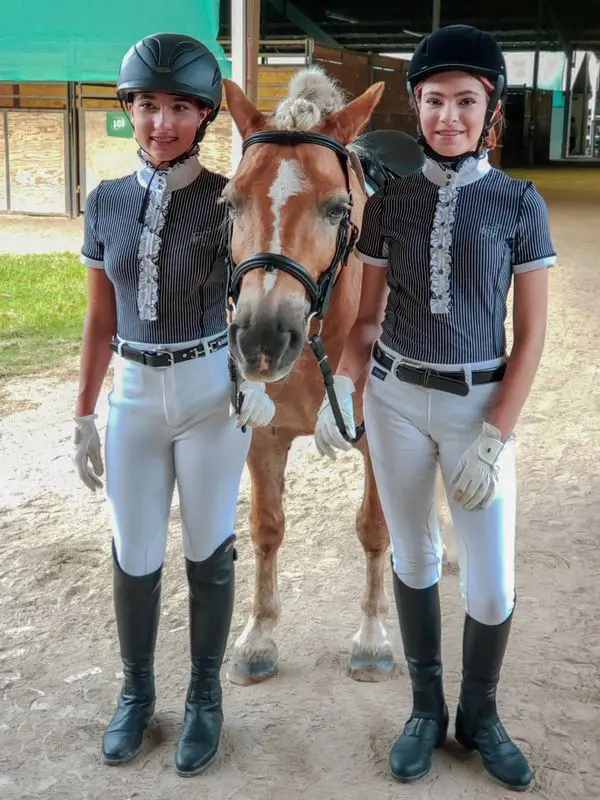
What Age Can My Child Start Dressage Lessons?
If your child lights up around horses, you’ve probably asked yourself this exact question. The answer isn’t a single number, it’s a range shaped by your child’s body, mind, and temperament. This guide walks you through what readiness actually looks like, what first lessons involve, and how to find the right program for your family near Austin.
Quick Answer: The Right Age to Start Dressage Lessons
Most children are ready for structured horseback riding lessons between ages 6 and 8, when they can balance independently, follow multi step directions, and stay engaged for a 30-minute session. Most children start riding lessons between ages 6 and 7, though formal dressage lessons are ideally timed between ages 6 to 8 depending on individual readiness.
At White Fences Equestrian Center, serving families in Austin, Manor, Pflugerville, Round Rock, Hutto, Elgin, and Georgetown, our Dressage For Young Riders program typically begins at age 8, we currently do not offer pony time and lead-line experiences.
There’s an important distinction here. Early riding means short, playful horse time and barn experiences that can start earlier. Formal dressage lessons involve systematic skill-building in the arena and usually begin once school-age maturity and focus are present. A good best age to start any horseback riding is often 6 to 8, but dressage lessons work especially well once kids understand concepts like straightness, circles, and rhythm-usually around 8 to 10.
The right age is a range, not a magic number. Readiness depends more on maturity than chronological age, and our instructors meet each child where they are while also relying on an specific age rule, the youngest rider we teach is 8 years old. If you’re unsure, schedule a low-pressure evaluation ride or barn tour to see how your child responds to horses and our program.
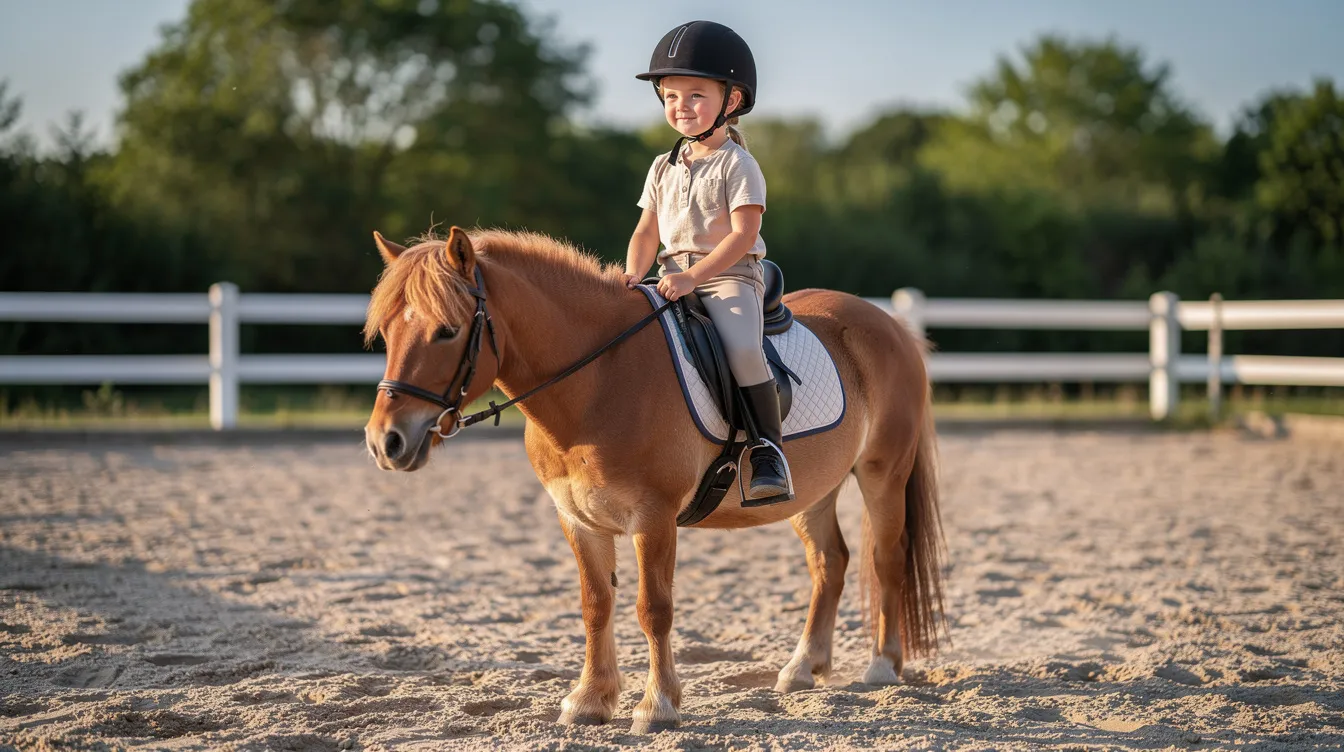
How Young Is Too Young? Understanding Age and Developmental Readiness
Chronological age is only one factor. Physical coordination, attention span, and emotional readiness are equally important when deciding the age to start riding lessons. The CDC’s developmental guidelines confirm that preschool-age children are still developing the core coordination and cognitive abilities that safe riding demands. Here’s what horse riding typically looks like at different stages:
- Ages 3–4: Occasional, adult-led pony rides. Introductory pony lessons can begin as early as ages 3 to 5, focused on building confidence and spatial awareness without rigorous technical expectations. While there are some locations that offer this, we do not offer lessons to kids younger than 8 years old.
- Ages 5–6: Short, play-based sessions at the walk, often on a lead line. Some programs accept children starting as young as 2, though most reputable programs wait until at least 5 for any mounted activity.
- Ages 7–8: Beginner riding lessons on the lunge or lead, with more focus on steering, posture, and transitions.
- Ages 9–12: More independent dressage lessons, patterns, and possibly local schooling shows.
Ages 4 to 6 should focus on basic horsemanship, safety, and grooming rather than formal arena work. Many children who rush into lessons before they’re ready end up losing confidence instead of building it. Some younger children thrive with early exposure, while others genuinely do better waiting until 8 or 9. Age alone is less important than a child’s maturity and interest in riding.
At White Fences, our instructors screen for readiness during a first visit-watching how a child moves, listens, and reacts to the barn environment before suggesting a lesson track. Because the focus and body control required for dressage is higher than casual trail riding, we prioritize readiness even more carefully.
Signs Your Child Is Ready to Begin Horse Riding or Dressage Lessons
Many parents sense that their child loves horses, but specific readiness signs help you decide when to actually start real horse riding lessons. Age-appropriate instruction should prioritize enjoyment and correct fundamentals over competition, and your child’s readiness matters more than any actual age.
Behavioral signs:
- Follows basic instructions at home or school
- Can follow directions through a multi-step task
- Shows curiosity about horses beyond toys or movies
- Demonstrates gentleness with pets or younger children
Physical indicators:
- Can balance on a bike or scooter
- Climbs playground equipment confidently
- Walks and runs without frequent tripping
- Can sit upright without constant slouching
Emotional readiness:
- Handles small frustrations without meltdowns-showing emotional regulation
- Accepts “not right now” and recovers quickly from minor scares
- Demonstrates emotional awareness around new or unpredictable situations
These signs connect directly to safety. A child who can listen and self-regulate even when excited is much safer around large animals. Children must understand safety rules around large animals for riding instruction, and dressage requires focus for 30 to 45 minutes during lessons. If a child develops these capacities early, that’s great. If not, groundwork-focused sessions come first at White Fences before we move into mounted Dressage For Young Riders work.
What Early Riding Can Look Like at Different Ages
Early riding doesn’t have to mean full formal dressage. It can be a gradual progression from pony time to real riding lessons as your child grows. Children can begin introductory lessons around ages 5 to 7 depending on individual development.
| Age Range | Activities | Session Length |
|---|---|---|
| 3 – 4 | Parent-led barn visits, brushing ponies, sitting on a calm pony at the halt with an instructor holding the lead | 5–10 minutes |
| 5 – 6 | Short mounted sessions at the walk, games in the saddle like “touch your toes” or “airplane arms,” still play-based on a lead line | 15–20 minutes |
| 7 – 8 | More consistent horseback riding lessons, learning basic steering, posting trot, simple dressage patterns like large circles | 30 minutes |
| 9 – 12 | Youth dressage lesson groups, working on rhythm, bend, light contact, possibly local schooling shows | 30–45 minutes |
General introductory pony programs can start as early as age 5 or 6, while structured riding fundamentals can start for children aged 6 to 7. Ages 7 to 8 are ideal for starting formal riding and introductory dressage basics. By age 7 or 8, most kids typically have the attention span and coordination for foundational English riding and dressage. Ages 7 to 9 are suitable for structured riding lessons and learning basic dressage fundamentals. Children 8 years and older can engage in dedicated dressage tracks, and riders 10 years and older can begin more formal dressage instruction and participate in local events.
Our pony and school-horse string at White Fences is specifically chosen for patience and reliability with children at each stage-from tentative first-timers to juniors working toward intro-level dressage tests.
Why Dressage Is a Great Foundation for Young Riders
Dressage is often called “ballet for horses.” It focuses on balance, communication, and precision, which makes it an ideal foundation for any equestrian journey. Unlike western riding, which may use western saddles and different cues, dressage emphasizes subtle aids through the seat, leg, and rein that build exceptional body awareness.
Early riding lessons improve balance, posture, and coordination. Children develop emotional intelligence through relationships with horses, learning to read horse behavior and body language. Riding teaches responsibility through grooming and caring for horses-skills in basic horse care that carry well beyond the barn. Children gain confidence by learning to communicate with horses, building trust and communication skills that translate to everyday life.
Riding also enhances cognitive skills like problem-solving and attention span. Learning dressage figures-circles, serpentines, transitions-sharpens memory and focus in a way that few other equestrian activities can match. Character growth follows naturally: working quietly and consistently with a horse builds patience, empathy, and self esteem, which many parents value as much as the riding skills themselves.
A dressage-focused start gives kids tools they can later apply to jumping, eventing, or other specific disciplines. At White Fences, kids in our Dressage For Young Riders program learn correct basics from day one rather than having to unlearn habits later.
Safety First: How We Prioritize Young Riders’ Safety
Safety is the non-negotiable foundation of every children’s riding lesson at White Fences, especially in our youth dressage program. Safety training is mandatory before interacting with horses, and programs should emphasize safety in every interaction with horses.
Equipment standards:
- All mounted activities require properly fitted helmets certified by ASTM/SEI-no bike helmets
- Heeled boots or paddock boots are required
- Properly fitted tack, well-maintained arenas, and controlled lesson environments
School horses:
- Lesson horses should have calm temperaments suitable for children
- Our horses are well-schooled dressage mounts experienced with young riders, selected to be forgiving of common beginner mistakes like bouncing or uneven contact
Instructor qualifications:
- Instructors must have current certifications in equestrian instruction
- Our experienced instructors have years of practice teaching children, using positive, age-appropriate communication. As a matter of fact our head trainer, Andrea Adkins was hand-picked by Robert Dover to represent the American Dressage Mentoring Program (ADMP) in Texas.
- Strict barn rules: no running, no feeding treats without permission, always maintaining safe distance near horses
Research from equine safety authorities shows that nearly 20% of horseback-riding injuries involve children under 15, but proper training, well-fitting gear, well-trained school horses, and adult supervision dramatically reduce that risk.
Children should start with ground-based activities before riding, and every first lesson begins with a safety briefing: how to approach a horse, where to stand, safe mounting with a block and assistance, and controlled walk work before attempting trot. Parents visiting from Austin, Manor, Pflugerville, Round Rock, Hutto, Elgin, and Georgetown can watch lessons firsthand and see our safety-first approach in action.
What Your Child’s First Dressage Lesson Looks Like
Knowing what to expect takes the mystery out of that first lesson. Here’s how a typical first horseback riding lesson for a child unfolds at White Fences.
Arrival and orientation:
- Greeting the instructor, fitting a helmet
- Quick barn tour covering basic rules
- Introduction to the assigned lesson horse or pony by name
Groundwork portion:
- Supervised grooming and leading to build trust, a good first equestrian lesson includes grooming and basic riding safety, not just riding
- Learning where it’s safe to stand around horses
- Walking the horse politely to the arena with the instructor
Mounted portion:
- Assisted mounting at a block-children need sufficient leg length and core strength for managing stirrups properly
- Learning correct basic position, holding the reins, starting at the walk on a lead line or lunge line
- Practicing stopping, starting, and basic riding skills like steering
Keeping it fun:
- Simple games like “red light, green light”
- Short stretches of trot if appropriate
- Frequent check-ins to gauge comfort and energy level
Younger children benefit from ground-based activities before riding, so some first lessons may spend more time grooming and leading than in the saddle. That’s perfectly normal. The lesson ends with cooling down, dismounting, a few minutes of rewarding the horse, and a quick conversation with parents about how the child did and recommended next steps. That single first lesson often tells us whether to move forward immediately or spend a session or two more on groundwork to build confidence.
Inside Our “Dressage For Young Riders” Program at White Fences
Dressage For Young Riders is White Fences Equestrian Center’s dedicated youth dressage track for children and teens near Austin who want more than casual pony rides. This riding program is built around long-term development, not quick results.
Age brackets and structure:
- Younger group (approx. 8–11): Foundational skills-seat, balance, walk-trot transitions, confidence building
- Older junior group (approx. 12–18): Working toward dressage tests, shows, and more advanced concepts
At ages 8 and up, children possess the physical strength required for specialized equestrian disciplines. Around age 8, children develop the understanding of abstract directions required for dressage-like “push your horse into the outside rein” or “ride a 20-meter circle at C.”
What’s covered in the first year:
- Basic seat and position
- Walk–trot transitions and simple patterns
- Introductory lateral movements on the ground
- Horse care skills: grooming, tacking, barn etiquette
Flexible options for families:
- Weekly private or semi-private riding lessons
- Group sessions for similar ages and levels
- Horse leasing or partial leasing as children advance
This lesson program supports long-term equestrian journeys with clear progression from beginner to show-ready junior rider, including optional show coaching at local dressage competitions around the Austin area. You can explore our dressage training approach online, and current rates are listed on our pricing page.
Choosing a Reputable Riding Program for Your Child
Not all horseback riding programs are created equal. The right program will feel safe, welcoming, and aligned with your child’s goals. Reputable programs share common qualities that are worth checking before you commit.
What to look for:
- Clear safety policies and prioritize safety in every aspect of instruction
- Experienced instructors who regularly work with children-instructor qualifications should be verifiable
- Well-cared-for horses respond best when they’re healthy and comfortable
- Clean, organized facilities with a welcoming environment
Practical steps:
- Visit in person and watch part of a lesson
- Observe how instructors speak to children-are young riders relaxed and engaged, or tense?
- Look for programs with certified instructors and calm horses
- Programs should match your child’s developmental needs
Youth programs should emphasize safe, well-trained lesson horses and horsemanship skills. If your family wants long-term skill development and correct basics, a structured dressage-focused riding school offers far more than a casual trail-only barn.
White Fences fits these criteria as a boutique, full-care facility with a professional covered dressage arena, strong focus on classical basics, and an environment supporting both beginner and advancing junior riders. We encourage families in Austin, Manor, Pflugerville, Round Rock, Hutto, Elgin, and Georgetown to visit barns to observe instructors and the environment before deciding-including ours.
Equipment and Clothing: What Your Child Needs (and Doesn’t) to Start
Families do not need to buy a horse or a full show wardrobe to start dressage lessons. Keeping it simple at the beginning is perfectly fine.
Must-haves for the first lesson:
- Long pants (breeches are best, but leggings: no shorts and no jeans). We recommend full seat breeches that fit the child.
- Closed-toe boots or shoes with a small heel (not sneakers)
- A fitted, ASTM/SEI-certified riding helmet-White Fences can often provide loaner helmets for initial sessions
Nice-to-have as your child continues:
- Paddock boots and half-chaps or jodhpurs
- Riding gloves
- Show attire if they decide to compete
White Fences provides the horses, tack, and grooming tools for lessons, so parents can wait on big purchases until their child is committed. Proper equipment makes a difference in comfort and safety, but it doesn’t all need to arrive on day one.
For Central Texas weather: lightweight sun-protective shirts in summer, layers for cooler months, and always tie back long hair or use a hairnet under the helmet. As children grow more serious, investing in properly fitted gear improves comfort and directly supports their dressage position-but that can happen gradually over the first year of lessons.
FAQ: Common Parent Questions About Kids’ Dressage Lessons
Here are quick answers to the most frequent questions many parents ask when considering horse riding lessons for their children.
Is my child too young for dressage lessons? The appropriate age to begin structured equestrian lessons is around 7 to 8 years old. Most kids are ready for formal dressage around that range, but child’s readiness is individual. If your child is younger, we may recommend pony time or groundwork-focused visits. If your child is 8 or older, please book an evaluation/assessment lesson and we’ll decide together whether to start riding immediately or begin with early experiences around the barn.
Do we need to own a horse? No. White Fences provides trained school horses for our youth program. Many riders start and continue for years on school horses. As riders progress, we also offer leasing options and support families considering eventual ownership.
What does it cost? In the Austin area, typical children’s riding lessons range from about $75 to $175 per session depending on lesson type and trainer level. Our detailed, current pricing is on our rates page.
Will my child learn “real” dressage or just basic riding? Even early lessons are structured with correct dressage basics: balanced seat, rhythm, straightness, and soft aids-scaled to be age-appropriate. Teaching children classical fundamentals from the start means they build skills on a solid foundation.
Can we try one lesson before committing? Absolutely. We offer an introductory private lesson (assessment lesson) so families can experience the barn, horses, and instruction quality without a long-term contract. Many parents find that one session answers most of their questions.
Planning Your Child’s Long-Term Equestrian Journey
Starting at the right age is just the beginning. Consistent, well-structured riding lessons can support your child’s journey from their first pony ride through teenage show seasons-building a lifelong passion along the way.
Typical progression:
- Beginner phase (first 6–12 months): Learning basics, comfort in the saddle, barn etiquette. This is where many riders start and where a lifelong love of horses often takes root.
- Developing phase (year 1–3): Riding more independently, maybe leasing a horse, exploring local shows. Started lessons translate into real competence.
- Committed phase: Junior rider working on specific dressage levels and goals, building toward a rewarding activity that lasts well beyond childhood.
Solid basics can take a year or two of weekly lessons. Dressage is a long-term partnership, not a quick-fix sport. It’s okay to start with once-a-week sessions-more time in the saddle can come later if your child loves it. School, other sports, and family schedules all fit around a flexible approach. Many riders manage dressage alongside everything else in their lives.
White Fences supports that entire child’s journey: consistent instructors, show support at local Austin-area dressage competitions, horse leasing options as kids outgrow beginner mounts, and a community of both young riders and adult amateurs. It’s a wonderful place to start early and stay for the long haul.
We’d love to help you figure out the right program and the right time. Visit our dressage lessons page, review our rates, or simply reach out to schedule a visit. Whether your daughter or son started asking about horses yesterday or they have been begging for a round pen session for months, the right next step is usually just coming out to the barn and seeing how it feels.