

E is for Elimination: Lessons from an Adult Amateur Dressage Rider
Sometimes the most important lessons arrive wearing a letter you didn’t want on your score sheet.
Yes, I Really Got Eliminated (and Lived to Tell the Tale)
Here’s a fun way to spend a Saturday in July: canter down centerline on your Haflinger dressage horse at a recognized competition near Austin, salute the judge sitting at C, and get to the walk portion of your test and forget which letter you were supposed to go. Mind you, you have practiced this test. It doesn’t matter if there is sweat dripping in your eyes and down your face….extend that walk to the correct letter. Before we go any further, let me say this: getting eliminated wasn’t the story. It was simply the event that forced me to rethink what success looks like as an adult amateur dressage rider. Adult riders that are usually full-time professionals, but who keep training, showing, and learning while balancing the rest of life. If you’ve ever left a horse show wondering whether all the work was worth it, this one’s for you, especially if you’re an adult amateur rider near Austin, TX looking for serious horsemanship, english riding, professional dressage training, full-care boarding, and support as you develop toward competition.
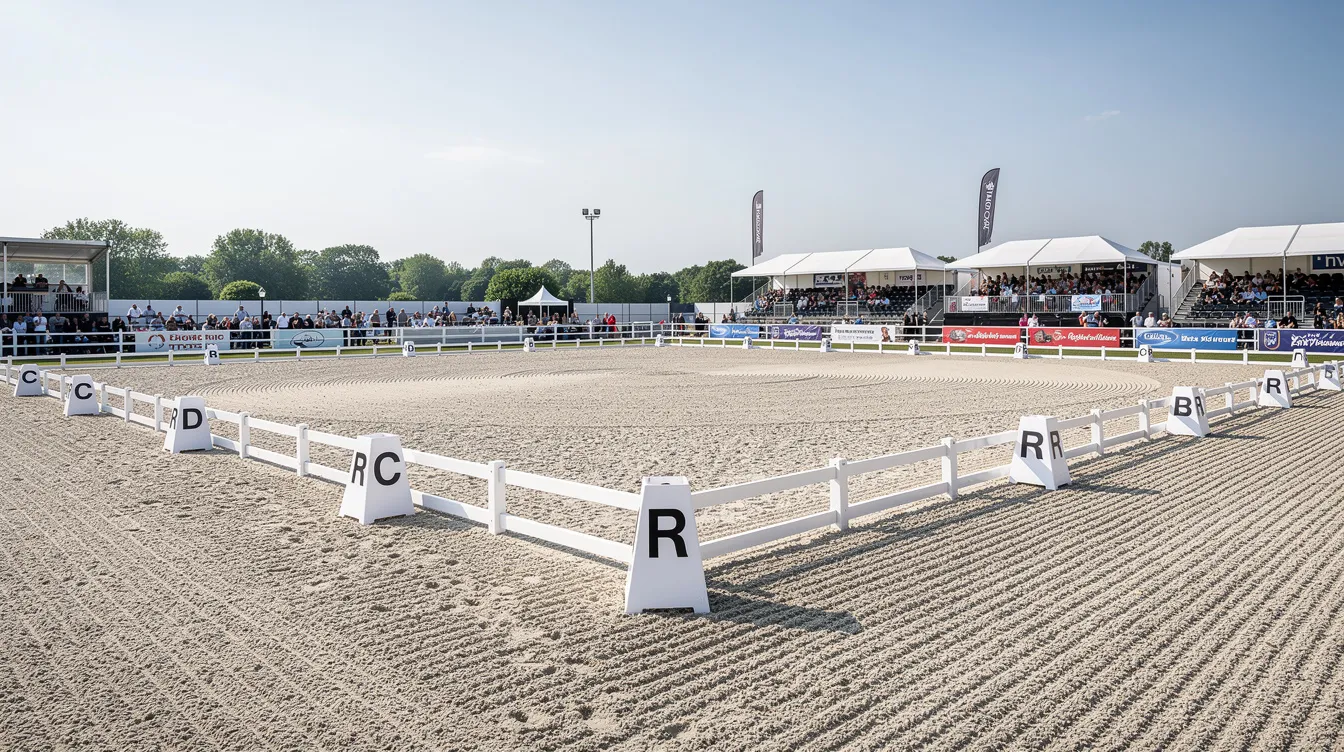
Dressage tests are performed in a 20m x 60m arena, which sounds spacious until your brain decides to vacate the premises somewhere around H. I was riding along, feeling genuinely good about our trot work, when the sequence of movements ahead of me just… evaporated. Not gradually. Instantly. Like someone hit delete on a file I was sure I’d saved.
I made my first course error. Then, within the same test, I made my second. My horse, who ALWAYS thinks he knows better, tried to take over. I had to fix it. I stopped him — IN FRONT OF THE JUDGE. My horse was like, ok fine, I’ll do it as you wish. I was very fortunate the judge let me finish and gave me some good feedback but just like that, E was for elimination.
At FEI levels of dressage, riders are expected to execute every movement in the prescribed order. Two course errors in a dressage test mean automatic elimination. The first error costs you two percentage points per judge. The second sends you home. And honestly? I agree with this rule. Each dressage movement is scored from 0 to 10, and riders at this level should know their tests cold. The rules exist for a reason.
But this story isn’t really about getting eliminated from a dressage competition. It’s about what that moment taught me about success as an adult amateur, and about the real work behind it: handling the mental and physical demands of FEI tests, bringing a horse along in its training, relying on good care and the right facility, and finding the kind of barn community, trainer and mindset that make long-term progress possible.
Wait, Didn’t We Practice This? The Second Test That Same Weekend
You’d think one elimination would be enough education for a single weekend. You’d be wrong.
I had a second FEI test on Sunday. Fresh start, clean slate, different judge. I walked the pattern in my head. I visualized every transition, every corner, every canter transition… Preparation includes memorizing tests and practicing specific movements in advance, and I had done all of that. Multiple times. At home. That morning, the day before; in my dreams; in my sleep. All the things…Then I entered the arena and forgot the canter pirouettes. Again!!!
My brain confidently steered us down the diagonal my brain completely leaving the building… as if pirouettes were optional. I was smiling, sweating and riding every step. My internal GPS was flashing “recalculating” in bright red, but I couldn’t see it because I was too busy being certain I was right.
The mental overload of FEI dressage is real. You’re counting tempi changes, feeling whether your horse is in front of your aids, scanning arena letters, and trying to remember if the extended canter ends at M or at H. It all happens at once. You can practice under show-like conditions to build confidence for competition, but sometimes your brain just picks the wrong file anyway.
That second error earned me another bell. Another walk of mild shame out of the arena. Another low score at the show office.
Gold Knows Best: When Your Horse Tries to Save You from Yourself
Here’s the part that still makes me laugh.
Gold knew. Before the bell rang, before the judge noticed, before my own brain caught up-my horse knew I was wrong.
At the exact point where the canter pirouettes should have started, he hesitated. Not a spook, not resistance. Just a quiet “Are we sure about this?” moment in his body. A slight shift of more weight onto his hind legs, a half-step of questioning feel in the contact. He was ready to perform a pirouette. I was ready to boldly do a line of fours….
He flicked one ear back at me. Classic Haflinger editorial. Dressage involves developing a horse’s natural athleticism and balance, and Gold had developed his well enough to know exactly where we were supposed to turn. The horse must perform a four-beat walk in dressage, sure, but apparently he can also perform a four-beat “I told you so.”
I ignored him. Confidently. Then the judge rang the bell and I knew it…Gold knew it. He said I told you so….We were given enough grace to allow us to actually do the movement. Gold left the arena at A looking mildly annoyed. Gold does dramatic, he kicked out sideways at our last change after the canter extension…oh by the way, that’s not considered obedient – but Gold has that specific Haflinger energy that says, “I tried to help and you didn’t listen.” In classical dressage, we talk endlessly about partnership and feel, about the relationship between horse and rider. Here was my horse giving me the right answer, and I overrode him because I assumed I knew better.
Adult Amateur Brain: FEI Tests, a Family and a Barn to Run
None of what happened that weekend surprised me as much as it should have. Not because I’m careless about memorizing dressage tests, but because my brain was running about forty-seven programs simultaneously.
I’m an adult amateur. That means I’m not a full-time sponsored athlete on a single grand prix horse. I ride at FEI levels while also running White Fences Equestrian Center near Austin-a boutique full-care horse boarding facility where the to-do list never actually ends. I am also a mother and a wife and try to be a good friend.
On a typical weekday, I ride my horses, and every single one is at a different stage of dressage training. A Third Level horse schooling flying changes. Gold practicing FEI movements. A nice import that was actually ridden by a professional where he and I are figuring each other out. A sweet but strong gelding who may never show again, we are in rehab building his body and muscles….and a sweet heart of a horse that has a heart of gold that makes you feel like you can ride. Unlike a dedicated training barn where several athletes might be working through similar programs, my mental file cabinet holds separate plans, timelines, and goals for each ride and horse. An instructor helps prevent the development of bad riding habits during training, and helping with each one and their unique needs.
Then there’s the business itself: coordinating horse boarding, answering lessons inquiries, managing tack and equipment, making sure the arena footing is dragged, scheduling the farrier. Adult riders benefit from cross-training to improve balance and core stability, but sometimes my cross-training is just carrying figuring out marketing plans and making sure the fences are upright and intact.
Community support is vital for adult amateurs in dressage training and competition. Adult amateurs can even compete at US Dressage Finals. But the path there runs through a lot of early mornings and divided attention. These aren’t excuses for forgetting my tests. They’re just the honest context of this life.
Gold the Haflinger: From Green Broke to Prix St. Georges (Quietly Extraordinary)
Let me tell you about Gold.
He’s a Haflinger. Compact, golden, built like a draft pony who minored in charm. If you saw him at a county fair, you’d assume he pulls a cart or gives pony rides. And you would be correct, that’s how he started out. He would also give rides to his young family, sometimes multiple kids at a time. You would not guess he performs canter pirouettes and tempi changes at FEI recognized competitions. Most days, I wouldn’t blame you. Haflingers are rarely associated with FEI dressage. Most people think of them as family horses, driving horses, trail partners, or versatile all-around mounts. They’re known for their kind temperament and incredible work ethic, not necessarily for canter pirouettes and tempi changes. That’s exactly why this journey has meant so much to me.
Gold started green broke. We’re talking basic steering, learning to carry a rider in a consistent direction, and figuring out that the arena letters were not snack dispensers. At Intro level, we worked on walk, trot, canter, and 20m circles-the building blocks. At training level, we began to develop real connection. Through First and Second Level, we found our rhythm. By the time we reached Third and Fourth Level, including flying changes and half volte, I realized we might actually have an FEI horse hiding inside this golden pony. Plus, he’s so much fun to ride, why not.
The timeline from green broke to Prix St. Georges stretched across four years of systematic training. Consistent training leads to improved communication and performance in dressage, and we proved that one 8:30 a.m. ride at a time. Scores of 65% or higher indicate readiness to move to the next level, and we chased that threshold at every stage.
I don’t say this to brag. I say it because when you’re always chasing the next goal, it’s easy to forget how far you’ve already come. A green-broke Haflinger performing Prix St. Georges is quietly extraordinary, and I almost forgot to notice.
Good Training Transcends Breeding: What Gold Taught Me About Dressage
Gold being a Haflinger didn’t make our journey harder in a way that excuses my mistakes. But it made me a better rider. And it challenges my trainer in new ways 🙂 I remember when we were working on first level, he wouldn’t steer and often times he would try to run into other horses and riders…on purpose. Then he picked up the fun habit of leaving the arena. Then he would leave the arena backwards. One time he walked out through small gap in the bushes…
His conformation and natural mechanics meant we couldn’t fake anything. Movements include leg yield, half-pass, and flying changes, and every one of those had to be built through deliberate, patient work. There was no relying on flashy natural suspension to carry us. We earned each movement through thousands of transitions, careful strengthening of his hind legs, and honest homework between shows.
Dressage training follows a six-step progression pyramid, and we climbed it slowly. The first level of the training pyramid is rhythm and regularity, we spent months there. Relaxation is the second level of the dressage training pyramid, and for a Haflinger who sometimes has opinions, that required its own patience. Contact is the third level, impulsion is the fourth level, and collection is the final level of the dressage training pyramid. Each stage took longer than it might on a purpose-bred warmblood, but each stage was solid when we moved on.
We did hill work to build hindquarter strength, lateral exercises at the walk and collected trot, and introduced collection long before attempting pirouettes. Success in dressage relies on mastering correct rider biomechanics, and Gold’s honest feedback made me sit straighter and ride more accurately than any clinic ever could. A custom dressage saddle is not necessary for beginners using school horses, but by the time we reached FEI, every piece of equipment and every aspect of equitation mattered.
Good dressage training is good horse training. Breeding matters less than correct basics. Classical dressage doesn’t care what color your horse is-and neither does the spanish riding school or the cadre noir. The discipline rewards correctness. Period.
Why Prix St. Georges Feels Like Learning Dressage All Over Again
People often ask me, “How hard can one level really be?” The honest answer? Prix St. Georges isn’t just another level, it’s an entirely different conversation.
It’s the first level of FEI dressage, where the expectation shifts from demonstrating that your horse understands the movements to proving that horse and rider can execute them with consistency, precision, and harmony. Suddenly you’re asking for canter pirouettes, multiple flying changes, extended gaits that truly cover ground, collected work that shows strength rather than slowing down, and half-passes that maintain rhythm, balance, and expression.
Each movement, by itself, is manageable.
The challenge is putting them all together in a single test while remembering where every movement belongs.
That’s what caught me this weekend.
At home, Gold and I can school canter pirouettes. We can practice tempi changes. We can improve our half-passes one movement at a time. But in a recognized FEI test, there are no do-overs. One movement flows immediately into the next, and before you’ve finished thinking about your extended trot, you’re already preparing for the next collected movement.
People often think FEI is physically harder. In many ways, it’s mentally harder.
And that’s exactly why I love it.
Every test reminds me that there is still another level of riding to aspire to.
Schooling FEI vs. Riding the Test: Why Everything Feels Faster at C
At home in our arena at White Fences Equestrian Center, schooling FEI movements feels almost meditative. Quiet morning, maybe one other dressage rider working at the far end, time to circle back if the pirouette isn’t quite right. No bell. No consequences. Just teaching and learning.
In a real dressage test at a recognized competition, everything compresses.
You have one shot at each movement. They arrive in rapid-fire sequence. For example, while riding a line of tempi changes, your body is feeling the current change, your brain is already counting the next one, and your eyes are scanning letters for where to prepare the transition to collected canter before the next movement begins. Judges look for obedience, suppleness, and accuracy during tests-simultaneously. Four general impression scores are given at the end of each test covering areas like the rider’s position and the horse’s way of going. Your rider position is evaluated on alignment from ear to heel for efficiency in communication with the horse. The highest score in dressage is 10, indicating excellence, and you’re chasing that on every single movement while also trying to remember what comes next.
Scores are converted into a percentage carried to three decimal points. Overall scores of 70% or over are considered very good, and at FEI levels, even experienced riders sometimes hover in the low-to-mid 60s while building consistency. The gap between schooling and showing is enormous.
Even riders who compete at the grand prix level-the highest level of competitive dressage, the level you see at the olympic games and the world equestrian games, make course errors. Not because they lack the skills or the ability, but because the sport under pressure is a different discipline entirely from schooling at home. And you are riding a horse that has thoughts and opinions.
Schooling Shows, Recognized Competitions, and Why I Still Show Up
Not every competition needs to be a pressure cooker.
Local schooling shows provide affordable competition opportunities for beginners and experienced riders alike. At White Fences, we host and support boarders at schooling shows that are perfect for testing a new level test, trying a musical freestyle, which combines dressage with choreography and music, or simply practicing the act of entering at A without the stakes of official scoring. These events also offer formats like pas de deux, which allows two riders to perform together, and quadrille, which involves team riding with multiple horses.
Recognized competitions are different. They use licensed judges for scoring, count toward United States Dressage Federation awards, and carry the weight of US Equestrian rules. That’s where my elimination happened. And that’s where I’ll go back.
Why? Because recognized competitions are where we measure progress across years, not weekends. I track how our scores at various levels evolve over seasons. Grand Prix is the highest dressage competition level, and while Gold and I aren’t there yet, every show at our current level is a data point on the longer path.
At White Fences, we support riders at both kinds of shows-hauling, coaching at the ring, helping decode what those cryptic comments on the score sheet actually mean. Whether you’re showing at lower levels or working toward the highest level, the point is showing up.
The Judge’s Comments: Finding Gold on an E’d Score Sheet
I walked to the show office fully expecting a score sheet that just said “ELIMINATED” in large, unsympathetic letters.
Instead, I found something better than a ribbon.
The judge had the scribe write comments throughout the entire test-every movement we completed before and after the wheels came off. Notes about our extended trot needing more reach. Observations about our half-pass requiring clearer bend. A remark about our extended walk showing good relaxation but needing more ground cover. Suggestions for earlier preparation in the collected canter before the pirouette.
That score sheet transformed the day. Instead of “I failed,” I left with what amounted to a private lesson on paper from a highly qualified professional who watched every stride. The understanding I gained from those comments was more valuable than any percentage.
I have genuine appreciation for judges who recognize that competitors, especially adult amateurs, are there to learn and develop, not just to win. FEI professionals note that only about 20% of success comes from raw ability; roughly 80% comes from confidence, mental preparation, and resilience. The judge’s willingness to engage with our test, even an incomplete one, fed all three.
Success that weekend wasn’t a ribbon. It was leaving with clear, specific feedback on how to make our training better. That matters more than a score in any country, at any level, in any arena.
Success Looks Different Than I Thought: Beyond One Weekend, One Score, One Mistake
My results sheet from that show reads “ELIMINATED.” If you measure success by a single weekend, I had a very bad one.
But here’s what my actual score sheet looks like when I zoom out:
A green-broke Haflinger who now understands half-passes, pirouettes, and flying changes. A horse who can perform various movements from collected trot to extended trot, from the long side to centerline, with honest effort every time. A dressage rider who went from fumbling through Training Level patterns to riding FEI tests in front of licensed judges. An equestrian center full of riders who watched me get eliminated and texted “been there” instead of “too bad.”
When you’ve spent close to a decade building something stride by stride, one weekend’s elimination doesn’t cancel the work. It’s a data point, not a verdict.
I want to speak directly to other adult amateurs for a moment. If you feel like you’re progressing too slowly, making too many mistakes, or wondering whether you’ll ever reach your goals, welcome to the club. The path through this sport looks like small increments punctuated by very public errors. That’s true at the lower levels. It’s true at FEI. It would probably be true at Grand Prix level if I ever get there..rephrase that…WHEN I get there. Even athletes at the highest level of eventing or competitive dressage have days where the focus slips and the bell rings.
Courage in this sport isn’t about winning. It isn’t about a freestyle that brings the crowd to its feet, although my dear friend accomplished that this weekend and it was amazing to watch. Sometimes courage is simply entering at A again next month, knowing there are no guarantees, knowing the same mistake could happen, and deciding the importance of showing up outweighs the risk of another E on the score sheet.
Stop chasing perfection for a moment and look behind you. See how far you’ve come. That’s the real score.
Five Things One Elimination Taught Me
Looking back, I wouldn’t erase this weekend if I could. It reminded me of five things I hope I never forget.
1. Memorizing a test is a skill all by itself.
- Knowing the movements and recalling them under pressure are two very different things. From now on, my preparation will include just as much mental practice as physical practice.
2. My horse is paying more attention than I sometimes give him credit for.
- Gold knew exactly where those pirouettes belonged. Next time he quietly asks, “Are you sure?”, I am going to listen before confidently telling him otherwise.
3. Progress isn’t measured by one score sheet.
- One elimination doesn’t erase four years of thoughtful, consistent training. If anything, it highlights just how far we’ve come.
4. There is always something left to learn.
- That’s one of the reasons I love dressage. The moment you think you’ve figured it out, the sport politely reminds you that you’re still a student.
5. Success isn’t perfection. It’s showing up anyway.
- I entered at A. I rode every stride. I made mistakes. I learned from them. Then I rode the next day, made another mistake… loaded Gold on the trailer, drove home, and started planning the next show.
To me, that’s what success looks like.
Back to the Barn: Breakfast, Cookies, and Listening to My Horse
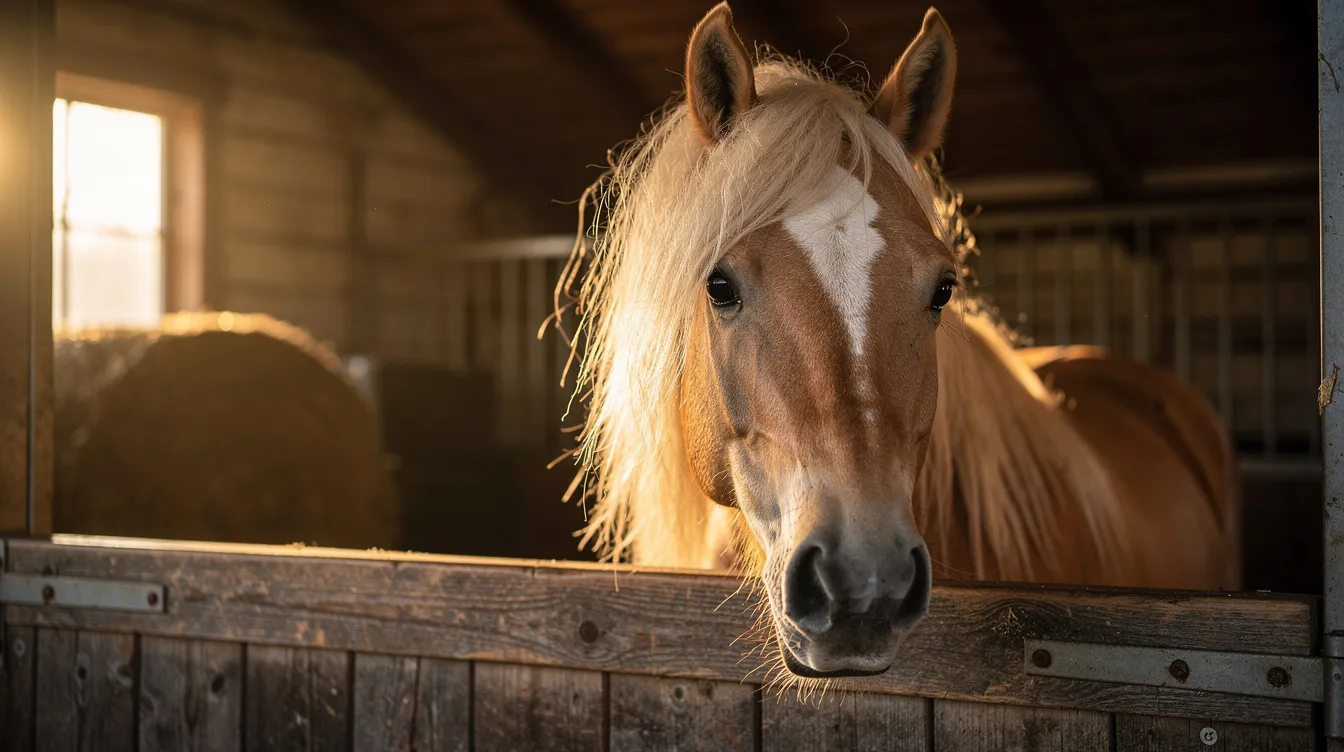
The morning after the show, Gold was standing at his stall door at White Fences, entirely unconcerned with dressage scores or elimination rules.
His priorities, in order:
- Breakfast, delivered on time, no delays
- A thorough curry-comb scratch on his favorite itchy spot behind the withers
- Turnout next to friends
- Maybe a cookie, if someone walks by looking susceptible
- A couple of days off for him to just be a horse
He didn’t care whether we scored a 58% or a 70%. He didn’t care that I forgot the pirouettes. He cared that I showed up, that his hay was there, and that life was predictable and kind. Our horses don’t measure us by ribbons or percentages. They measure us by consistency, by the quality of our leads, by whether we listen when they try to tell us something.
Next time we ride that FEI test, when Gold quietly suggests where the canter pirouettes belong with a tiny hesitation or shift in balance, I plan to listen to him first and my overconfident internal GPS second. He’s earned that trust. Probably more than I’ve earned his.
Elimination isn’t the end of the story for an adult amateur. It’s just an especially loud reminder bell on the long, messy, wonderful path of dressage training with a very smart golden pony who knows the test better than I do.
And who still wants his cookies.
If you’re an adult amateur pursuing your own dressage goals, whether you’re riding Training Level or dreaming of FEI, I hope this story reminds you that progress is rarely linear. At White Fences, we believe every rider deserves thoughtful instruction, patient horses, and a community that celebrates the journey, not just the ribbon.