

Dressage Training Austin: Classical Principles, Consistent Programs, and Ethical Progress at White Fences
Every horse deserves a plan, not a patchwork of random rides. Here’s why structured classical dressage changes everything for horse and rider in the Austin area.
Is White Fences the Right Place for Dressage Training in Austin, Texas?
Yes, if you are looking for serious, biomechanically correct dressage training near Austin, Texas, White Fences Equestrian Center in Manor is built for you. We offer full-care boarding (which includes daily feeding and cleaning), a structured dressage training program, riding lessons at every skill level, and show support for riders who choose to compete.
Our focus is classical dressage, a discipline that emphasizes balance, strength, and longevity in horses. We apply classical training principles to modern competitive dressage, always prioritizing horse welfare, rider safety, and long term soundness over quick results. Classical dressage emphasizes progressive training for all horse breeds, and riders of all levels can benefit from classical dressage lessons, so whether you ride a warmblood, a Quarter Horse, or an Iberian cross, you belong here.
We welcome beginner riders, “back in the saddle” adults, juniors, and experienced competitors. We are not a drop-in lesson barn. Consistent programs are required because they are kinder to the horse’s body and more satisfying and a better return for the rider. That distinction matters, and the rest of this article explains why.
The Myth of the “Drop-In” Lesson: Why Consistency Matters in Dressage Training
Imagine an adult rider in the Austin area who takes a lesson at one barn in January, tries another trainer in March, then squeezes in a clinic in May. Each instructor offers slightly different cues, different terminology, different priorities. The rider feels perpetually stuck at the same level.
This is the drop-in trap: irregular scheduling, no long-term plan, and conflicting instructions from different trainers. From a biomechanics and learning-theory perspective, this inconsistency makes it nearly impossible for dressage riders to build strength, developing balance, or reliable understanding of the aids. Progressive training emphasizes long term development rather than quick fixes, and that development requires repetition, continuity, and trust.
A structured program does not mean a high-pressure “show factory.” It means calm, predictable, ethical progress for both horse and rider. At White Fences, structured progression through regular sessions, typically two to four rides or lessons per week, is the foundation of true horsemanship, whether or not you ever choose to compete. Finding a suitable training program involves assessing the trainer’s teaching style and communication, and horses in boarding facilities benefit from structured training programs that match their physical needs with clear, consistent goals.
White Fences in Austin, Texas: Who We Are and What We Offer
White Fences Equestrian Center is a boutique, full-care equine facility located in Manor, on the east side of Austin, Texas. We’re roughly twenty-eight minutes from downtown, convenient to Round Rock, Pflugerville, and Elgin. The toll road makes us accessible to riders or horse owners in Georgetown and Cedar Park.
Our amenities are designed around the horse’s comfort and the rider’s development:
- Arenas: Covered dressage arena with modern footing and outdoor arena, covered round pen, quality footing and safe arenas are crucial in dressage training facilities, and top-tier training facilities offer amenities such as covered arenas for protection from Texas heat and weather. We also maintain groundwork areas that enhance horse training and clear communication from the ground up.
- Stabling: Multiple boarding options – pasture, private paddocks, legacy stalls, and show barn stalls – providing comfort and safety for every horse.
- Premium care: Multiple tack rooms, one that is climate-controlled, wash racks with hot and cold water, customized feeding programs, regular turnout, and organized barn management. Premium amenities support horse care and training at every level.
Core services include classical dressage training, riding lessons, horse leasing options, and show support at local and recognized dressage competitions. While we are dressage-focused, we also support hunter/jumper and all-around English riders by building correct flatwork rooted in classical principles that carry across other disciplines. What sets us apart is a well planned, program-driven environment: well trained school horses, trainers who have deep knowledge who focus on continuing education, individualized plans, and a deep emphasis on biomechanics and horse welfare.
Classical Dressage Principles Applied in Modern Austin Training Programs
Classical dressage is a systematic method of developing any sound horse into a supple, balanced athlete through gymnastic, progressive work. It originated as a practical system for rideable horses, centuries before it became a competition sport. Xenophon’s On Horsemanship, written around 350 BCE, remains a foundational text for classical dressage, and institutions like the Spanish Riding School in Vienna and the Cadre Noir in Saumur carry that history forward today.
At White Fences, classical dressage training means focusing on the training scale: correct rhythm, relaxation, suppleness, contact, impulsion, straightness, and collection. The training scale in dressage outlines this progression from basics to collection, and dressage training often incorporates the USDF training scale for systematic development. Rhythm and relaxation are foundational in classical dressage training, everything else is built on top of them.
We contrast this with purely competition-driven approaches that may chase flashy gaits or quick scores. Our ultimate goal is a “happy athlete”: sustainable soundness and a harmonious partnership between horse and rider. Classical dressage emphasizes progressive training for self-carriage, meaning the horse learns to carry itself in balance rather than leaning on the rider’s hands.
These classical training principles apply whether your goal is schooling shows around Austin, recognized USDF competition, or simply safer riding on trails and in the arena. Advanced work: half-pass, flying changes, pirouettes, and eventually high level movements like piaffe and passage, should be developed so the horse can perform them in balance and harmony rather than being forced early. There is no forced movement in this art.
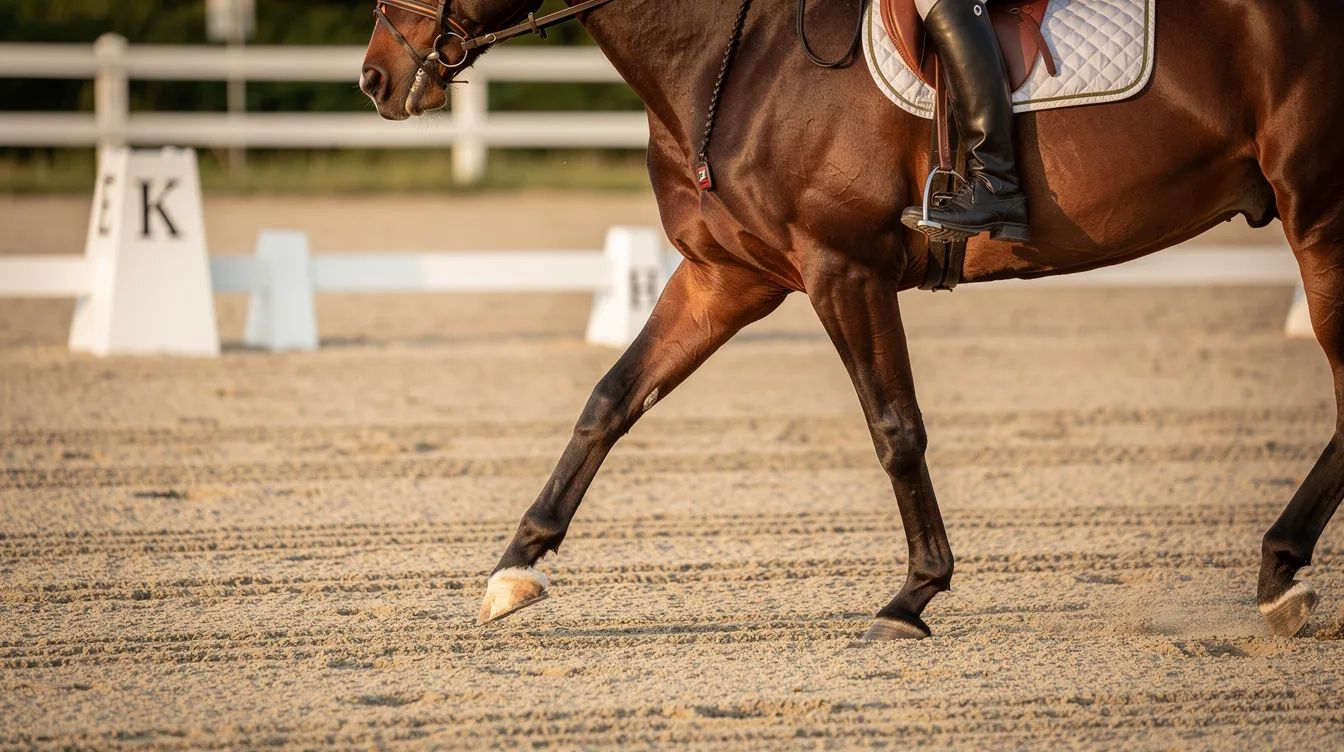
Biomechanics 101: Natural Asymmetry and Why Your Horse Feels “Crooked”
Like humans being right- or left-handed, every horse has natural abilities and natural limitations tied to laterality. Most horses are stronger and more flexible on one side, stiffer to the right, perhaps, or drifting through the left shoulder on circles. This is anatomy, not behavioral defiance.
Research published in PLOS ONE found that clinically sound, high-level dressage horses walking unridden still exhibited consistent asymmetries in vertical motion at the withers, correlated with differences in limb movement and hindquarter deviation. A separate literature review on laterality in horses confirmed that this asymmetry is neurological and anatomical baseline, not misbehavior. The training goal is to build equal strength and coordination on both sides, not to punish the horse for being crooked.
Here’s how asymmetry typically shows up under saddle:
- Falling in or out on circles
- Difficulty bending in one direction
- Uneven contact (heavier in one rein)
- The rider’s seat slipping to one side
Dressage training primarily focuses on classical foundations, balance, and rider communication to address these patterns. Classical training uses progressive lateral work, correct circles, transitions, and carefully designed exercises over weeks and months to rebalance the horse’s body. Elastic contact allows natural movement without restriction, letting the horse find its own balance rather than being held in a frame.
Rider asymmetry matters too. Research from Centaur Biomechanics shows that a rider’s habitual imbalance can alter the horse’s motion, causing irregular gaits and conflict in communication. Consistent training addresses both horse and rider together, which is impossible through irregular, drop-in lessons that cannot build the neuromuscular patterns needed to overcome asymmetry.
Beyond the Straight Line: True Straightness in Classical Dressage Training
True straightness in classical dressage does not mean simply pointing the horse down the long side of the arena. It means the hind legs step exactly into the tracks of the front feet so energy flows from the hindquarters, through a supple back, into a soft and elastic contact. A horse can travel on a perfectly straight line while still being crooked in its body, shoulders drifting, haunches swinging, power leaking sideways.
At White Fences, we use specific exercises to cultivate this lateral balance:
- Shoulder-fore and shoulder-in – aligning the horse’s shoulders in front of the hind legs
- Leg yield – teaching the horse to move laterally from the rider’s leg
- Transitions on straight lines – testing whether the horse stays aligned when the gait changes
- In-hand work – which improves clarity and communication from the ground before these concepts are refined in the saddle
Collection is developed gradually through this kind of systematic training. You cannot rush it, and you cannot achieve it in irregular intervals. Classical dressage training aims for long term soundness and harmony, and straightness is the bridge between suppleness and collection on the training scale.
True straightness is also a safety issue. An unbalanced, crooked horse is at higher risk for strain, stumbling, and inconsistent performance, especially if ridden only sporadically. For competitive riders pursuing flying changes, half-pass, or collected canter, straightness is non-negotiable. For every rider, it makes each ride safer and more enjoyable.
Program-Based Dressage Training: How Our Austin Lesson Structure Works
Riders participate at White Fences in several ways:
| Option | Structure | Best For |
|---|---|---|
| Full-time training board | 16+ training services/month in a systematic program for training horses | Competitive riders, young horses in systematic training |
| Partial training | 2–3 pro rides + 1–2 owner rides/week | Adult amateurs building skills alongside a trainer |
| Regular weekly lessons | Minimum 6 lessons/month on own horse or lease | Riders developing their riding independently with guidance |
Horse boarding supports long term development of riding skills, and choosing a training program should consider your horse’s needs alongside your goals. We ask every new rider to identify their objectives and skill level before starting dressage training so we can build a plan that fits.
A typical program rhythm might include two to three training rides and one to two lessons per week. This cadence supports consistent progress in both horse and rider without overwhelming either. We begin with an evaluation ride, discuss goals, from a confident first canter to FEI-level competitive dressage and update the plan every few months based on what we see.
Clear communication matters: we use the same core language and concepts across all lessons so riders avoid the confusion that comes from hopping between unrelated teaching styles at different barns. This structure reduces stress for horses by keeping their routine predictable and their aids consistent, which is especially important for sensitive or green dressage horses. We believe training should be accessible, not intimidating. While our methods are rooted deeply in human and equine biomechanics, we translate complex anatomical science into clear, relatable concepts you can immediately feel in the saddle.
Riding Lessons in Austin: From Beginner Dressage to Advanced (FEI) Work
We serve a full spectrum of riders: true beginners learning safe handling and basic position in the saddle, returning adult riders rebuilding confidence on horseback, juniors developing show-ring skills, and experienced riders refining lateral work and collection.
All lessons, even at walk-trot level, are rooted in classical training principles. Lessons often emphasize rhythm, relaxation, and balance before increasing difficulty. Riding lessons can focus on classical dressage principles from the very first session, and lessons can include groundwork to improve communication and balance before the rider ever mounts.
Lesson content evolves over time:
- Foundation: Accurate circles, figures, correct basics of the rider’s seat, rhythm in all three gaits
- Developing: Leg yield, shoulder-fore, simple transitions, developing balance and suppleness
- Advancing: Half-pass, simple and flying changes, pirouette preparation, collected and extended gaits
- Competition prep: Test-ride coaching, mental skills for horse shows, and arena focus under pressure
Lessons in Austin typically range from $75 to $150 per hour, and evaluating a trainer’s certification is essential when choosing dressage training. We help competitive riders in the Austin area prepare for dressage tests from Introductory Level through upper FEI levels. But the tone is always encouraging and detail-oriented, we help adult amateurs feel confident, not judged.
Private Lessons, Lease Horses, and Life at the Barn
Many facilities provide both private focused sessions and more affordable group lessons, and White Fences is no exception. Our group lessons are small, sorted by level, with exercises that help both horse and riders learn to focus in company. Riders practice arena etiquette used at competition, and they develop the concentration needed when the arena isn’t empty.
Group lessons also build something harder to measure: community. Dressage can be a solitary discipline, and watching other riders work through the same challenges provides visual learning and mutual encouragement.
For riders who do not yet own a horse, we offer horse leasing options partial and full leases on suitable dressage horses carefully matched to the rider’s goals and experience. Riders often recommend observing a lesson before committing to a training program, and we welcome anyone to come watch before making a decision.
Daily life at the barn includes regular turnout schedules, quiet schooling mornings, and occasional clinics with visiting dressage professionals, boarding facilities often host clinics with recognized clinicians to bring fresh perspectives. This consistent community environment is part of why horses relax and thrive here compared with more transient, drop-in-focused barns across the Austin area.
Dressage Training for Different Horse Breeds and Natural Abilities
We work with a wide range of horse breeds common around Austin and Central Texas:
- Warmbloods (Dutch, Hanoverian, Oldenburg)
- Quarter Horses and Paint Horses
- Thoroughbreds and off-track prospects
- Iberian breeds (Lusitanos, PREs)
- Draft crosses and other breeds
- Ponies of various types (and attitudes 🙂
Classical riding is not limited to Iberian or warmblood dressage horses. Any sound horse, regardless of breed, can benefit from improved balance, suppleness, and straightness. Conformation and natural abilities influence the training plan: we might focus on building thrust and swing in a naturally collected breed, or teaching collection to a horse bred for speed or stock work.
Concrete examples of what this looks like:
- Improving a hunter/jumper’s flatwork through classical dressage so jumping becomes safer and more balanced
- Helping a trail horse carry itself better on hills and uneven ground
- Developing a young horse toward eventual FEI or grand prix potential through years of patient, systematic training
Dressage training lessons can include opportunities for competition support at various levels, but we design individualized programs rather than forcing every horse and rider into a single competitive dressage pathway. The training methods stay the same; the destination is yours to choose.
Competitive Dressage vs. Classical Focus: Finding the Right Path for You
A classically grounded program prioritizes correctness and welfare first, then channels that strong foundation into competitive dressage if the rider desires. A purely competition-driven approach may reverse those priorities – chasing scores before the horse is physically or mentally ready.
Many White Fences riders choose to show at local Austin and Central Texas horse shows, while others never enter a ring and still train with the same quality and attention. We prepare horses and riders for everything from schooling shows to USDF-recognized competition, but we do not pressure anyone into showing or chasing levels. Competitive success is a byproduct of correct training, not a prerequisite for it.
Classical training principles help competitive riders achieve more consistent scores over time by improving the correct basics – not just rehearsing tests. When the horse moves in genuine balance with clear communication between horse and rider, the scores follow. Structured programs protect the horse and empower the rider, whether the long term development leads to a grand prix centerline or a confident, joyful canter across a pasture.
Ethical Horsemanship: Why Our Program Requirements Protect Horses and Riders
Our requirement for consistent lessons or training rides is an ethical choice. Sporadic work followed by high expectations is physically and mentally unfair to the horse. Muscles, tendons, and joints adapt best under steady, measured load. An irregularly ridden horse is more likely to be tense, confused, or physically unprepared – raising the risk of falls or injuries for both horse and rider.
Regular, lower-pressure sessions create confident, trusting horses that understand their job and feel physically capable of doing it. This is not about intensity; it is about consistency. The pillars we’ve discussed throughout this article addressing natural asymmetry, cultivating true straightness, building strength and collection gradually through classical training, all demand that consistency.
This is what systematic training looks like when the sport of dressage is practiced as an art rooted in the welfare of the horse. It is horsemanship that respects history, science, and the living animal underneath you.
If you’re in Austin, Texas, or anywhere in the surrounding area, we invite you to schedule a visit or facility tour at White Fences Equestrian Center. Come watch a lesson. Meet the trainers. Ask every question you have. Then let’s build a plan, together, for the kind of progress that lasts.