

Is Dressage Training Worth It for Your Horse?
For many riders, the question isn’t whether dressage training works, it’s whether it’s the right investment at the right time. Training requires commitment, consistency, and trust in the process. Understanding when it adds real value, and when it may not, can help you make a more confident decision for both you and your horse.
Quick Answer: When Dressage Training Is (and Isn’t) Worth It
Dressage training delivers consistent, progressive improvements in your horse’s balance, rideability, and long-term soundness when you can commit to regular work. Most horses need 4–5 correctly ridden sessions per week to build muscle memory, suppleness, and hind quarters engagement without overtaxing the body. This frequency creates the foundation for real change.
The investment may not make sense right now if your goals are purely casual, your time is limited to 1–2 rides weekly, or your budget can’t sustain consistent training for at least three months. A horse requires repetition for gains in topline strength and adjustability, infrequent work maintains basic fitness at best but fails to develop advanced balance or collection.
Consider two scenarios: An 8-year-old Quarter Horse used primarily for weekend trail riding may see limited value from intensive dressage due to insufficient weekly consistency. Meanwhile, a 5-year-old warmblood targeting Training Level competition in 2026 benefits significantly from structured basics like rhythm, straightness, and transitions enabling safe level progression over 3–6 months.
This article frames dressage as a systematic training system applicable to nearly any riding horse. Its value comes from alignment with your specific goals, realistic schedule, and commitment, not from abstract ideals about what dressage “should” do.
What Dressage Training Actually Does for Your Horse
The French term “dressage” literally means training. It’s a structured system of exercises designed to develop your horse’s body and mind progressively over time. The Fédération Équestre Internationale (FEI) defines it as “the highest expression of horse training,” focusing on developing a horse’s natural athletic ability and willingness to perform.
In concrete terms, here’s what changes:
- Better rhythm at walk, trot, and canter
- Straighter lines and even bending on curved lines and circles
- Smoother, more adjustable transitions
- Precise steering and responsiveness to the rider’s aids
- Variable stride lengths from collected to extended trot
Training builds a strong topline (back and neck muscles), helping the horse carry a rider’s weight efficiently without straining its spine. Dressage is widely considered the foundational flatwork for all riding disciplines, from jumping to trail riding.
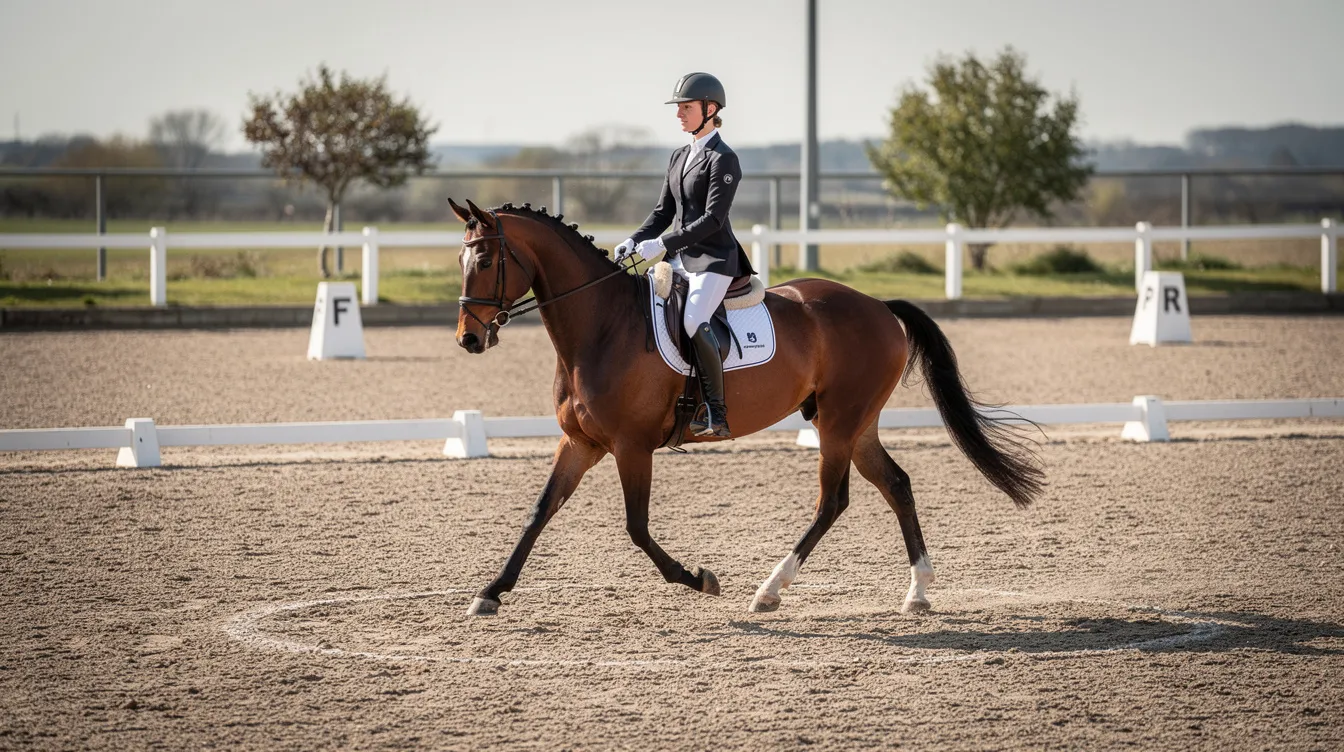
The platform of correct basics includes steady rhythm, suppleness, contact, impulsion, straightness, and later collection, concepts essential for improving any horse’s performance. This creates a communication language between you and your horse through consistent aids from seat, leg, hand, and weight. Dressage develops a better partnership between horse and rider through nuanced aids, teaching the horse to respond to subtle cues rather than heavy hands or constant kicking.
When Dressage Training Is Worth the Investment
Value comes from the match between your goals, your horse, and the program, not from dressage as an abstract concept. Here’s when structured dressage training typically delivers the strongest returns.
The stalled partnership: You’re riding 3 times weekly in 2026, but progress feels random. Some days your horse is light and responsive; others, heavy and disconnected. A structured program introducing consistent half-halts and lateral work rebuilds clarity in your communication.
The green horse: Your 4-year-old has basic walk-trot skills but falls apart in the canter, rushing, leaning on the forehand, or swapping leads. Systematic dressage develops rhythm and straightness before these issues become entrenched habits.
The aspiring competitor: You’re targeting USDF Intro or Training Level tests next season. Progressive plans align daily exercises with test requirements, for example, consistent 20-meter circles at the trot, balanced transitions, and steady gaits that judges reward.
A consistent, structured training program helps horses feel more comfortable, confident, and mentally calm. Training focused on rhythm and relaxation can help anxious horses settle over time. Expect noticeable improvements in rhythm and steering within 30 days, stronger transitions at 90 days, and visible canter adjustability at 180 days with steady workload.
Young and Green Horses: Preventing Problems Before They Start
For horses aged 3–7 years beginning their careers in 2024–2026, early dressage basics, straightness, rhythm, bending, and correct transitions, prevent issues before they start. Common problems like rushing gaits, crookedness, resistance to contact, or even future lameness often stem from skipped foundational work.
Dressage can be introduced at any age, but starting younger typically yields quicker results with less confusion, enhancing the horse’s agility, balance, suppleness, and cooperation. A 5-year-old OTTB in its first post-track year provides a clear example: systematic canter work shifts it from forehand leaning to self carriage, reducing joint stress through hind legs engagement after 1–3 professional rides weekly plus owner sessions.
Dressage corrects a horse’s natural crookedness, ensuring it distributes weight evenly and uses both sides of its body symmetrically. For young horses, this early investment often means fewer expensive “fixes” later, you’re building correct basics from the start rather than retraining ingrained imbalances.
Older or Versatile Horses: Adding Longevity and Rideability
Horses 10+ years old engaged in trail riding, low-level jumping, ranch work, or lesson programs gain longevity from dressage basics. Enhanced core strength, suppleness, and natural balance translate to easier-to-sit trots, reduced tripping through better proprioception, and smoother downward transitions.
By correcting postural issues and building strength, dressage can lead to fewer veterinary bills and a longer working life. Regular work improves the suppleness of both sides of the horse, making them more agile and balanced. Exercises in dressage increase the horse’s range of motion and joint mobility.
Consider a 14-year-old Paint gelding trail riding weekends and occasionally schooling crossrails. After 6 months of weekly dressage lessons emphasizing half-halts and circles, he becomes more responsive and builds hind quarters power. By teaching the horse to shift its weight to the hindquarters, dressage relieves pressure on the front legs, reducing wear on joints and extending a horse’s competitive career.
Results progress slower than with a younger horse, expect visible suppleness changes in 3–6 months with 3–4 sessions weekly. But for consistent workhorses serving novice family members, this extended working life delivers real value.
Dressage Isn’t Just for Dressage Horses
The best news! Modern trainers integrate dressage basics across other disciplines daily. Jumpers develop adjustable canters. Eventers gain stride control before and after fences. Western horses improve suppleness through turns. Trail mounts learn straightness on uneven terrain. The benefits of dressage training, improved muscle conditioning, soundness, flexibility, rideability, and behavior, apply across equestrian disciplines.
The fundamentals of dressage can significantly enhance any horse’s long-term soundness and athletic ability. The basics of dressage, such as rhythm and relaxation, benefit any riding discipline, not just warmbloods you see in the dressage arena.
Specific tools cross discipline boundaries effectively:
| Dressage Exercise | Cross-Discipline Application |
|---|---|
| Within-gait transitions | Adjustable pace for trail hills |
| 10–20m circles | Supple turns for barrel racing |
| Leg yield | Sidepassing to gates |
| Half-halts | Rating speed in group rides |
| Counter canter | Balance for jumping courses |
You don’t need to wear a coat, look like a founding father and wear a stock tie or show USDF to benefit. These concepts integrate into regular schooling rides regardless of your discipline.
How Dressage Changes the Ride for Jumpers and Eventers
Dressage refines jumper performance through core strength for rounded bascule, balanced push-off, and supple spine flexion. The practical results: adjustable canters, straight lines on approaches, stable landings, and fluid turns between fences.
A horse competing at 0.90–1.00m classes in 2025 becomes noticeably more rideable after months of canter-trot-canter transitions and shoulder-fore work. The horse feels lighter in the rider’s hands, offers more push-button responses, and shows less pulling toward the base of fences. Dressage training enhances a horse’s natural athletic ability and willingness to perform, maximizing its potential as a riding horse.
Top riders routinely prioritize dressage-style lateral exercises, with most riders integrating 2–3 days of flatwork weekly into conditioning programs. The shift from rails-down rounds to clears often comes from enhanced suppleness and balance, not just more jumping practice.
Benefits for Trail, Western, and Pleasure Horses
Dressage basics equip trail and Western horses for real scenarios: half-halts rate downhill speed, transitions negotiate steep hills, leg yields enable sidepassing to gates, and lateral movements foster quiet mounting block behavior.
A 9-year-old Quarter Horse rushing descents provides a clear example. After systematic work on hill-adapted lateral work and transitions, she remains balanced and responsive, whether in a Western saddle or snaffle bit. Dressage enhances movement and longevity while promoting a calm, willing attitude in horses regardless of tack.
Dressage is widely considered worth the investment because it acts as “medicine” for the horse’s body and mind. The emotional gains matter for time-strapped amateurs: relaxed, confident responses from clear rider’s aids mean safer, more enjoyable rides without switching disciplines or equipment.
How Dressage Training Improves the Rider
Investing in dressage training is rarely just about the horse. The rider learns a clearer, more consistent way to communicate through every session. Dressage training enhances the rider’s balance and effectiveness by teaching them to maintain a balanced position over the horse’s center of gravity, which allows the horse to find its own balance more easily.
Concrete skill improvements include:
- Independent seat that doesn’t rely on reins for balance
- Better positioning over the horse’s center of gravity
- Softer hands with more nuanced rein contact
- Precise timing of aids for transitions and movements
A rider’s position significantly influences the horse’s performance; a balanced and supple rider allows the horse to move more freely and expressively. Consider the amateur who used to rely on the reins to stop, now using seat and core for quieter, more harmonious rides by late 2026.
For many owners, the “worth it” factor comes more from taking lessons and coaching than from full training alone, especially when budget is tight. Improved rider skill ripples across disciplines: calmer trail rides, more controlled canter in group lessons, fewer refusals at fences.
Building a Common Language: Aids, Timing, and Feel
Dressage lessons teach coordination of seat, leg, and rein, not isolated cues like “kick to go, pull to stop.” Effective communication between horse and rider is achieved through the consistent use and timing of rein, leg, seat, and weight aids, applicable across various riding disciplines.
Specific examples include using a half-halt to rebalance before a downward transition, or applying inside leg to outside rein to keep the horse straight on a 20m circle. “Feel” develops as the ability to notice when the horse’s head drops, a shoulder falls out, or the pace rushes, and to correct early with subtle aids.
Dressage basics training helps every type of horse by enhancing agility, balance, suppleness, and cooperation through a systematic method. After 8–12 weeks of weekly lessons, many dressage riders notice their horse becoming more responsive because communication is clearer. Consider this training time as an investment that benefits every horse you’ll ride in future years.
Confidence, Safety, and Show Readiness
Better balance and communication translate directly to safety outcomes. Spooks escalate less frequently. Control improves in open fields. Group rides become smoother experiences. The structured nature of dressage encourages a focused mind and a calm disposition in horses.
A beginner rider who avoided cantering in lessons now comfortably rides 20m circles and completes Intro/Training Level dressage tests after a season of structured work. This progression builds trust and predictability for both horse and rider.
Dressage training gives riders a repeatable warm-up routine for clinics and shows, reducing nerves. In 2026, many local schooling shows and USDF-recognized shows offer Intro and lower levels accessible to adult amateurs. The emotional ROI matters: more trust, more predictability, and confidence to try new activities with your own horse.
When Dressage Training May Not Be the Right Step (Right Now)
Saying “not now” differs from “never”, and can protect both budget and expectations. Intensive dressage programs falter without owner consistency to support the training process.
Training may not fit your situation if:
- You only ride 1x weekly and cannot add more sessions
- Your goals are strictly casual (occasional walk-only trails)
- Your first horse has significant unresolved health or behavioral issues requiring veterinary intervention first
- Budget constraints prevent sustaining consistent work for 3+ months
Without follow-through between trainer rides, improvements don’t stick. The horse’s movement reverts, and your return on investment drops significantly. Horses require repetition, most horses need regular work to maintain gains.
More fitting alternatives for these situations include monthly tune-up lessons, groundwork clinics, or shorter, clearly bounded training periods rather than open-ended programs. Waiting until time, budget, and goals align makes a future dressage program more effective. Not everyone needs full training immediately.
What Makes a Dressage Program Truly “Worth It”
Quality programs share identifiable markers beyond price or prestige. Look for these concrete signs when evaluating any barn or trainer:
Structure and progression:
- 4–5 structured weekly sessions with varied intensity
- Clear 3, 6, and 12-month progression plans
- Attention to individual horse temperament and conformation
Correct methodology:
- No reliance on harsh gadgets or see-sawing hands
- Emphasis on rhythm, relaxation, and straightness before collection
- Horses in the program look relaxed and sound, not just winded and sweaty
Correct training builds topline muscling, improves flexibility, and enhances symmetry, leading to longer-lasting soundness. Dressage strengthens a horse’s topline, core, and hindquarters, preventing injury and promoting longevity.
Visit on a typical weekday. Watch how horses warm up, cool down, and how their mental state is handled between exercises. “Worth it” includes transparency: regular communication with the owner, ride notes, videos, and clear expectations about owner participation.
How to Compare Programs (Beyond Just Cost)
When comparing 2–3 local programs in your region, look beyond board plus training price. Ask specific questions:
| Question | Why It Matters |
|---|---|
| Who rides the horse, trainer, assistant, or working student? | Quality of daily work varies significantly |
| How many pro rides vs. lessons per week? | Balance affects rider development |
| How do they introduce lateral work and upper level movements? | Progressive approach prevents confusion |
| What do horses in long-term training look like after 1–2 years? | Results speak louder than promises |
A slightly higher monthly fee may deliver more value if you receive regular coaching, video reviews, and clear homework. Consider logistics too, commute time and lesson times that fit a busy schedule matter for realistic consistency.
Document observations in a simple comparison table rather than relying on first impressions after a single barn visit.
Costs, Timelines, and Realistic Expectations
Many owners balance horses with demanding careers. Here’s what to expect for money and time.
Typical 2025–2026 costs in mid-sized US cities:
| Service | Monthly Range |
|---|---|
| Full training + board | $1,500–$3,000 |
| Weekly private lessons | $400–$800 |
| 2x weekly lessons | $800–$1,600 |
What changes at each milestone with consistent work:
- 30 days: Improved rhythm and steering
- 90 days: Stronger topline, smoother transitions
- 180 days: Noticeable difference in canter adjustability, introduction of flying changes and half pass for appropriate horses
Major transformations, moving from unbalanced green horse to consistently scoring mid-60s at second level, typically require 1–2 years of steady work on a horse’s training.
Set 1–2 specific, measurable goals before committing funds. “Ride a relaxed Training Level 1 dressage test by October 2026” gives you a clear benchmark for evaluating whether the investment pays off.
Maximizing the Return on Your Investment
Extract more value from every dollar with these strategies:
- Attend as many of your horse’s training rides as possible
- Take regular lessons yourself, not just sending the horse
- Keep ride notes or a simple journal tracking changes
- Mirror the trainer’s warm-up routine and exercises in your own rides
Even after leaving full training, maintain progress with structured home schooling and periodic check-ins. Record short video clips every 4–6 weeks to visually compare progress, this makes answering “Was this worth it?” much easier later.
The more engaged you remain, the higher the return. Horses enjoy consistent expectations from their rider, and your rider’s ability improves alongside the horse.
How to Decide If Dressage Training Is Right for Your Horse This Year
Before committing for the 2026 show and clinic season, work through these reflection questions:
- What are my concrete goals for my horse over the next 12 months? Competition? Safer trails? Moving up levels?
- How many days per week can my horse be worked realistically? Be honest, not aspirational.
- Am I willing to change my own riding habits and learn alongside my horse? Your rider’s position and timing matter as much as the horse’s training.
- What budget can I sustainably commit for at least 3–6 months? Short bursts rarely deliver lasting change.
- Have I observed day-to-day training at potential barns? Watch how horses are worked, not just the fancy horses at shows.
Start with a defined trial period, 90 days of training or weekly lessons, with clear benchmarks. After that period, assess observable changes in rhythm, balance, and your partnership.
The right dressage program at the right time transforms partnerships. It builds a dressage horse capable of greater things while developing a confident, effective rider. When goals, schedule, and commitment align, the investment delivers measurable value for years to come.
Whether you’re visiting the Spanish Riding School in Vienna for inspiration or working with a grand prix rider locally, the principles remain consistent. Evaluate your situation honestly, choose a program that matches your reality, and commit to the long game, both in the saddle and in life. Choosing the right training program is not just about improvement, it’s about finding the right fit for your horse and your goals. 👉 See the training program in action at White Fences Equestrian Center, outside of Austin, Texas